

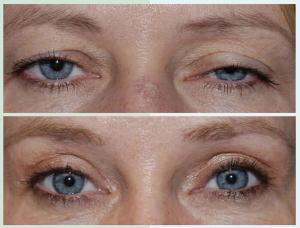
Ptosis Surgery in Antalya, Turkey | Drooping Eyelid Correction by Dr. Emir Doğan
Restore your field of vision and achieve a refreshed, symmetrical look with Ptosis Surgery in Antalya. Specialized Oculoplastic Surgeon Dr. Emir Doğan performs precise levator muscle repair to correct drooping eyelids safely and naturally.
PTOSIS
Ptosis is defined as drooping of the upper eyelid, partly covering the pupil. As you get older, the levator muscle that lifts your upper eyelid stretches and weakens, causing your eyelid to sag. Ptosis causes a tired, sleepy appearance and reduces vision. Some patients with ptosis also have excess skin and fat in the upper eyelid, which can be corrected at the time of ptosis repair. Ptosis surgery can also be performed to make you look younger if one of your eyelids has begun to sag or there is a difference in the height of your eyelids. Ptosis surgery is an operation to tighten the muscle that lifts your upper eyelid.
Children and adults can have ptosis. Fortunately, this condition can be treated to improve vision as well as appearance in Turkey.
Ptosis in children
Children born with ptosis have what is called congenital ptosis. This can be caused by problems with the muscle that lifts the eyelid .
The most obvious sign of ptosis is a drooping eyelid. Another sign is when the upper eyelid creases do not line up evenly with each other. A child with ptosis may tip their head back, lift up their chin, or raise their eyebrows to try to see better. Over time, these movements can cause head and neck problems.
Sometimes, a child born with ptosis can also have other eye-related problems. They can include eye movement issues, eye muscle disease, tumors and other problems.
Having ptosis puts a child at risk for vision problems. If the child’s eyelid droops so much that it blocks vision, amblyopia (lazy eye) can develop. One eye will have better vision than the other. A child with ptosis can also have astigmatism, where they see blurry images. The child may also develop misaligned (crossed) eyes.
I am doing this for my surgery clinic located in Antalya Turkey.
Surgery is to either tighten the levator muscle or attach the eyelid to other muscles that can help lift the eyelid. The goal is to improve vision.
Ptosis in adults
Adults get ptosis when the levator muscle stretches or separates away from their eyelid. This can be caused by aging or an eye injury. Sometimes ptosis happens as a side effect after certain eye surgery. Rarely, diseases or tumors can affect the eyelid muscle, causing ptosis.
Ptosis surgery is usually done as an outpatient procedure, which means you can go home the same day as the surgery. A local anesthesia will be used to numb your eye and the area around it.
Sometimes, the surgeon may only need to make a small adjustment to the lid’s lifting muscle. For more severe ptosis, the levator muscle may need to be strengthened and reattached to the eyelid.
Before eyelid surgery, be sure to tell your ophthalmologist about all the medicines you take. Include all prescription and over-the-counter medications, vitamins, and supplements. It is important for your eye surgeon to know if you take aspirin (or aspirin-containing drugs) or blood thinners, or if you have a bleeding problem.
After Surgery
After surgery, your eyelid will be swollen and your vision will be blurry. It is important to elevate your head and use cold compresses as much as possible after surgery to reduce the swelling. If the swelling is excessive it could stretch the sutures and cause the eyelid to droop again.
After surgery, the operated eyelid will be stiffer than normal. When you go to sleep and your facial muscles relax, your eyelid will tend to open slightly. In general, the weaker the lifting muscle was before surgery the more stiffness will be produced by surgery. However, it is necessary to use lubricating ointment and/or drops to prevent dryness. In most people these lubricants will be needed for a few weeks after surgery.
Risks
The risks of ptosis surgery include:
• Unusual bruising or swelling after surgery
• Infection
• Need for adjustment or additional surgery
• Asymmetric eyelid height
• Overcorrection or undercorrection
• Dry spots requiring lubricants
• Stiffness of the eyelid in downgaze
Ptosis surgery recovery time
You should be able to go home after a few hours.After surgery, you can usually go back to normal activities within 1-2 weeks, Some bruising is normal up to two weeks after the procedure, and some swelling is normal for several weeks.
Because of the complexity of ptosis correction, some patients need more treatment in the future. in some cases, additional surgery is needed.
Do not get your eyelid wet, do strenuous exercise or bend down until the stitches are removed.
Do not wear eye make-up or drink alcohol for a few weeks, and keep your face out of the sun.
Do not swim for 4 weeks.
Summary
Ptosis surgery involves lifting your eyelid to improve its position and improve your vision. You should consider the options carefully and have realistic expectations about the results.
| Feature | Details |
| Operation Time | 45 to 90 Minutes |
| Anesthesia | Local Anesthesia with Sedation |
| Hospital Stay | Outpatient (Same Day Discharge) |
| Recommended Stay in Antalya | 5 – 7 Days |
| Recovery Period | 7 to 10 Days |
Why Choose Dr. Emir Doğan for Ptosis Surgery?
Why Choose Antalya for Drooping Eyelid Correction?
Ophthalmic & Oculoplastic Specialization: Performed by a specialized eye doctor who precisely measures levator muscle function to protect corneal safety and visual fields.
Functional & Aesthetic Improvement: Lifts the lid to restore unobstructed vision while restoring natural eye symmetry.
Minimally Invasive Techniques: Concealed incisions made within natural eyelid creases for hidden scarring.
International Patient Journey (4-Step Process)
Step 1: Online Evaluation
Send clear frontal eye photos looking directly at the camera via WhatsApp for a pre-assessment.
Step 2: In-Person Consultation & Muscle Testing
Dr. Emir Doğan measures your levator function, eyelid margin distance, and plans the precise surgical lift.
Step 3: Surgical Repair
Performed safely under local anesthesia with sedation to allow real-time lid height verification.
Step 4: Post-Op Care & Return Flight
Follow-up assessment, suture removal check, and tailored post-care instructions before you fly home.
Q: What is the main difference between Ptosis Surgery and Blepharoplasty?
A: Blepharoplasty removes excess skin and fat from the eyelids, whereas Ptosis Surgery tightens or repairs the levator muscle responsible for lifting a drooping upper eyelid.
Q: Can Ptosis Surgery be combined with Blepharoplasty?
A: Yes. Many patients have both excess skin and a drooping levator muscle; combining both procedures achieves optimal functional and aesthetic rejuvenation.
Q: How long should I plan to stay in Antalya for Ptosis Surgery?
A: We recommend a 5 to 7-day stay in Antalya for post-operative monitoring and final suture checks before traveling back home.